
Solar window film for heat, glare, and UV control
Solar film is for south and west-facing glass, offices, lake homes, condos, and rooms where heat, glare, or fading keeps coming back.

Comfort without replacing the glass
Solar film can reduce heat gain, glare, and UV exposure while keeping the room usable. Film selection depends on performance goals and the appearance you can accept. Solar-control and low-e films have different thermal properties. We review product data and glass compatibility before recommending a film; any energy savings depend on the building and operating conditions.
- Best fit: sunny living rooms, offices, lake-facing glass, retail, condos, and rooms with fading floors or furniture.
- We check: glass type, exposure, frame condition, interior reflections, HOA or building restrictions, and film compatibility.
- You get: a product recommendation matched to comfort, appearance, and warranty requirements.
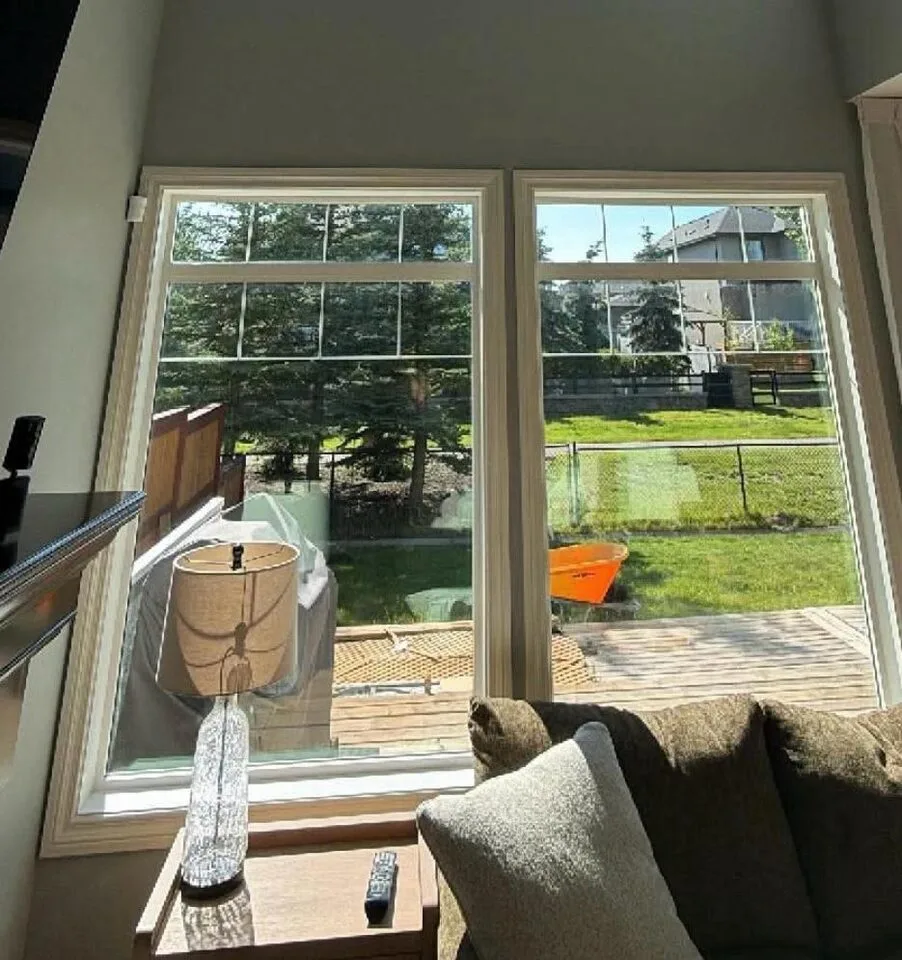
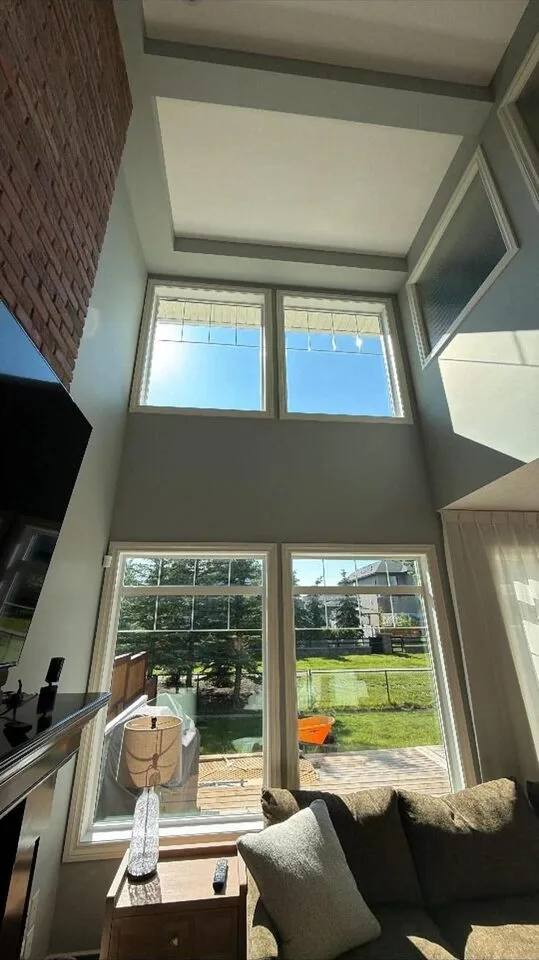
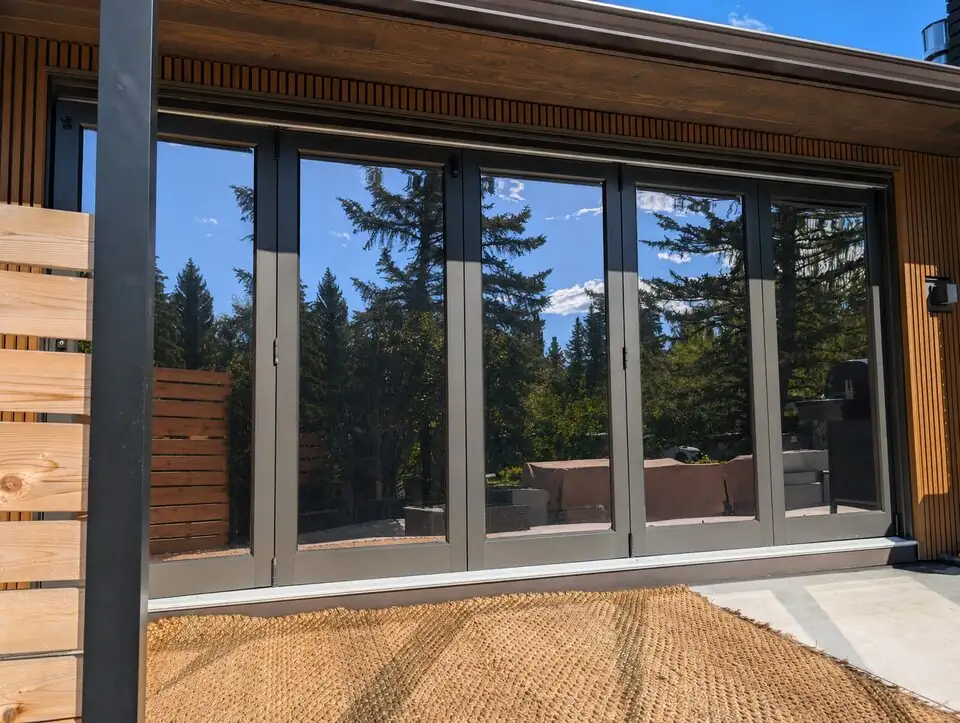
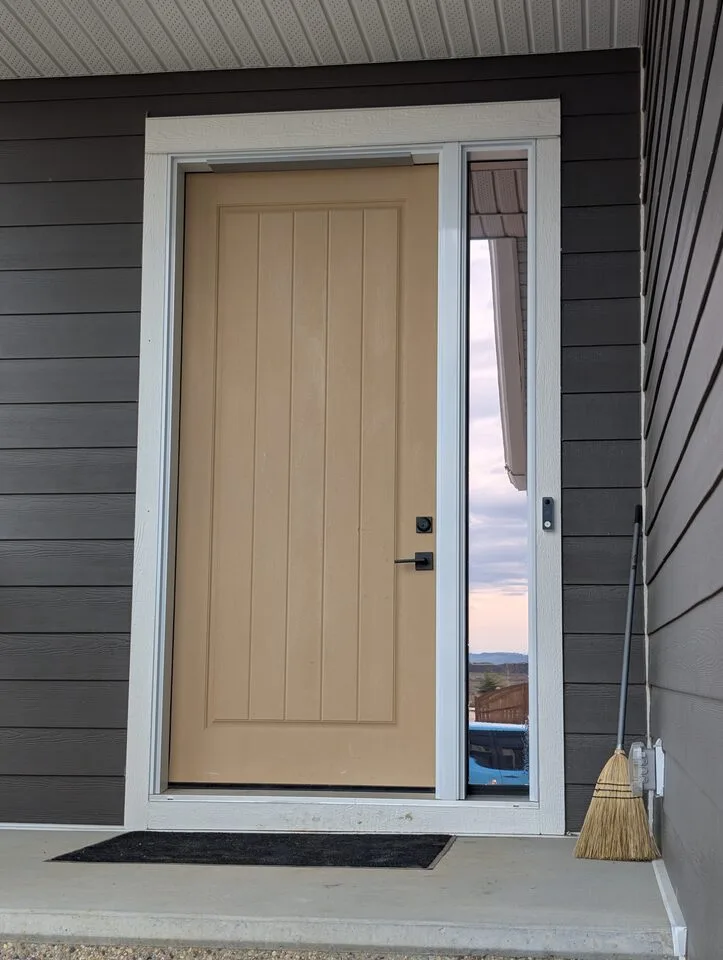
Project fit
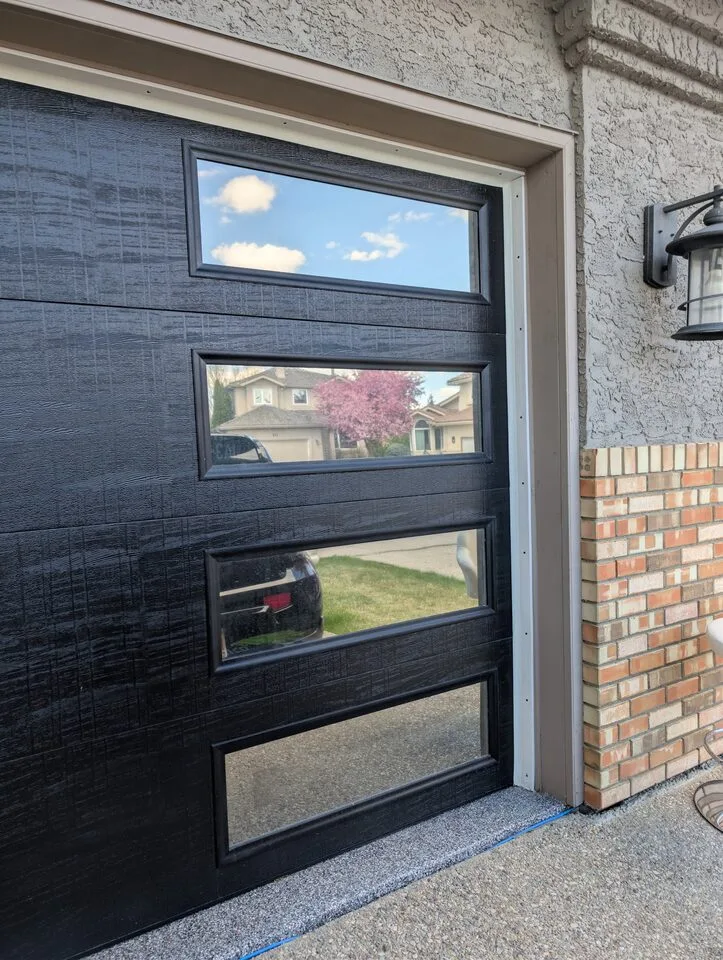
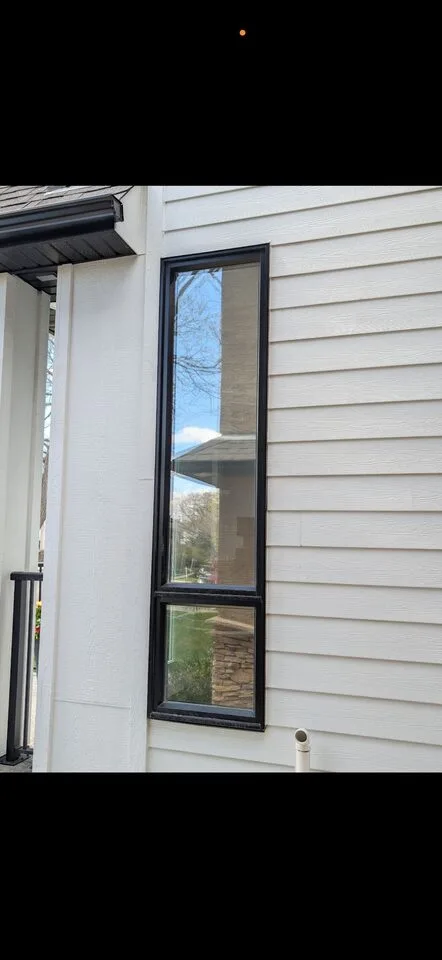
Glass, access, solar-control goals, and schedule shape the film and installation approach we recommend.
Glass preparation
Glass prep, clean edges, film layout, and manufacturer method matter as much as the finish itself.
Warranty terms
Film and material coverage, where it exists, is manufacturer-provided, set and administered by the manufacturer under its own written terms, and not a Wall Style Innovations warranty; any term is as stated on your quote. Our workmanship warranty is 1 year for residential projects and 2 years for commercial projects.
What to confirm
Confirm the glass type, sun exposure, appearance target, and warranty requirements before choosing film.
Site review
Photos, measurements, glass condition, and film details show whether we can estimate remotely or need a site visit.
Pricing factors
Film specification, access, prep, pane size, glass compatibility, and scheduling can change the final price.
Installation sequence
We confirm glass prep, protection, film handling, installation method, cure or dry time, and final review before handoff.
Performance Detail
Solar film selection is a balance between comfort, appearance, and compatibility
Solar window film can help with heat, glare, UV exposure, and fading, but the right film depends on glass type, room orientation, desired appearance, warranty limits, and how much visible light you want to keep.
Best use cases
South- and west-facing rooms, home offices, bright living rooms, lake-facing glass, retail windows, and offices with screen glare are common candidates for review.
Compatibility checks
Dual-pane glass, coatings, frame condition, interior reflections, building rules, and manufacturer guidance can affect which film is appropriate.
What to send
Send photos of the glass, room orientation, approximate pane sizes, and the main issue: heat, glare, UV fading, privacy, or a combination.
Solar film planning table
Solar film needs practical performance context. The right film depends on whether the priority is heat, glare, fading, privacy, daylight, appearance, or a combination.
| Problem | Film Direction | Important Checks |
|---|---|---|
| Heat gainSouth and west exposure | Solar-control film matched to comfort needs, appearance, and glass compatibility. |
|
| GlareScreens, offices, bright rooms | Film selected for visible light reduction while keeping the room usable. |
|
| UV and fadingFloors, furniture, retail displays | UV-rejection film selected to reduce exposure with realistic expectations. |
|
| Comfort plus privacyHomes, offices, street-facing glass | Solar or reflective privacy film only when day-night behavior fits the space. |
|
Performance and warranty notes
Performance numbers for UV, heat, glare, privacy, or glass containment are manufacturer-rated for the specific product and glass system. Real-world results vary, so we confirm the expected fit before quoting.
Home Window Tinting for Heat, Glare, and UV Control
Residential window tinting can reduce heat gain, glare, and UV exposure on south- and west-facing Calgary windows without replacing the glass. We review glass type, exposure, room use, and appearance before recommending solar window film for the room.
Good fit for:
- west-facing living rooms with afternoon Chinook glare
- south-facing windows with summer heat gain
- home offices where screen glare is the daily complaint
- rooms with fading furniture, hardwood, art, or millwork
- commercial glass with heat or glare complaints from staff
- offices, clinics, and retail spaces with direct sun exposure
Send a few photos of the glass and the room exposure and we will recommend a residential or commercial solar film path before booking the site visit.
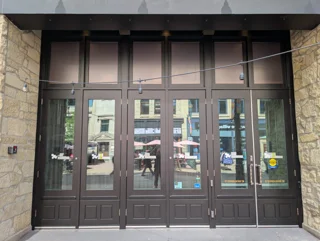
For a street-facing commercial example, see our Stephen Avenue storefront solar-film installation.
Is tinting your home’s windows worth it in Calgary? Pros and cons
Honest answer: for south- and west-facing glass, usually yes; for north-facing or shaded windows, often not. Home window tinting is a film applied to the inside of your existing glass, so the case for it is comfort and protection, not resale value.
Pros
- Heat and glare without darkening the room — ceramic and spectrally selective films reject a large share of infrared heat while staying nearly clear; blinds can stay open.
- UV protection for floors, furniture and art — architectural films block almost all UV, the main cause of fading on hardwood, rugs and millwork.
- Cheaper and faster than replacing windows — installed per square foot (see the Calgary price ranges), usually a one-day install with no construction.
- Chinook-season comfort — west-facing rooms that overheat on sunny winter afternoons benefit most.
- Daytime privacy as a side effect — reflective and some dual-reflective films reduce what people see in from the street during the day.
- Professional warranty — installed film carries the manufacturer’s written program plus our workmanship warranty; DIY rolls carry neither.
Cons
- Not every window can take every film — dual- and triple-pane low-e units limit the choice; we check the manufacturer’s film-to-glass chart and refuse excluded combinations, which sometimes means a lighter film than you hoped for.
- Reflective films change the look — the mirror effect reverses at night with interior lights on, and the exterior appearance is visible from the street; choose ceramic if you want the glass to look unchanged.
- It is not insulation — solar film reduces heat gain; low-e film helps a little with winter heat loss, but neither replaces a failed seal or a drafty frame.
- Cure haze for the first weeks — slight cloudiness and small water pockets are normal while the film cures (longer in cold weather) and clear on their own.
Rule of thumb: if a room is uncomfortable because of sun, tinting it is worth it; if the complaint is cold, the answer is elsewhere.
Types of home window tint: solar, privacy, security
- Solar / heat-control film (this page) — for heat, glare and UV on sunny glass; clear ceramic to light reflective.
- Privacy film — frosted for 24-hour privacy on bathrooms, front doors and sidelights; reflective for daytime privacy on street-facing rooms.
- Safety and security film — thicker film that holds broken glass in the frame for hail, break-in delay and child safety on low glass and patio doors.
Many Calgary homes combine two: solar on the west wall, frosted on the entry glass. We quote each pane by what it needs.
Solar window film FAQ
Will solar film make the room dark?
Not always. Film choice controls the tradeoff between heat rejection, glare reduction, visible light, and appearance. Some rooms need a lighter film; others need stronger glare reduction.
Does solar film stop fading?
Solar and UV-control film can reduce UV exposure and heat-related stress, but it cannot eliminate fading completely. Sunlight, heat, visible light, material sensitivity, and existing damage all matter.
Is every window compatible with film?
No. Glass type, coatings, seals, frame condition, pane size, exposure, and manufacturer guidance can affect film compatibility. Photos and basic glass information help avoid recommending the wrong product.
Can film replace blinds?
Sometimes film reduces the need for blinds, especially for glare and fading. It does not provide adjustable shade or full night privacy, so the best answer depends on the room and expectations.
FAQ
How do we start?
Send photos, rough dimensions, product links, and the result you want. We will confirm whether the project is a fit and what information is still needed.
Do you provide the material?
Some projects are client-supplied and some are sourced through trade channels or partners. The best route depends on the finish, warranty, and availability.
What warranty applies?
Film and material coverage, where it exists, is manufacturer-provided, set and administered by the manufacturer under its own written terms, and not a Wall Style Innovations warranty; any term is as stated on your quote. Our workmanship warranty is 1 year for residential projects and 2 years for commercial projects, subject to project conditions and documented exclusions.
Send glass photos, room orientation, and what problem you want solved: heat, glare, fading, or privacy.
Low-E and Sun Control Film Options
Calgary homes with large west-facing glass benefit from low-e (low-emissivity) window film that reflects heat back into the room in winter while still rejecting solar heat gain in summer. Sun control window film is the broader category — both low-e and conventional solar film fit under it, with the right product chosen based on glass orientation, room exposure, and whether year-round thermal performance matters.
For west-facing glass with Chinook glare or south-facing rooms with hardwood, send photos of the glass and a rough orientation note. We will recommend the right sun control film for the room without darkening your view.
Residential Window Film for Calgary Homes
Solar window film, sometimes called residential window tinting or residential glass tinting, is one of the few comfort upgrades that does not require replacing the glass. For Calgary homes with afternoon sun, large west-facing windows, or a finished room that runs noticeably warmer than the rest of the house, a clear ceramic or spectrally selective film can reduce heat gain, glare, and UV fading without darkening the room.
Home window tinting is selected by performance goal, not by colour. Two homes can have the same square footage of glass and need entirely different films. A west-facing living room with a mountain view usually wants a clear ceramic film. A south-facing home office with screens needs glare reduction first. A nursery or bedroom with hardwood floors needs UV protection above all. A condo facing the street may need privacy film instead.
For Calgary’s altitude and exposure, the right film is rarely the darkest. The right film is the one that solves the room’s specific problem while leaving the view, the daylight, and the appearance intact.
Film-Type Selection Guide for Residential Glass
| Film Type | Best for | Visible change |
|---|---|---|
| Clear ceramic | Heat & UV control with view preservation | Near-invisible |
| Spectrally selective | Maximum heat rejection at full visibility | Subtle |
| Dual-reflective | High heat + daytime privacy | Mirrored exterior; loses privacy at night with interior lights on |
| Dyed (legacy) | Lowest-cost glare reduction | Visibly darker; less durable |
| Frosted / decorative | Privacy (24-hour) | Opaque white or patterned |
| Safety / security | Glass containment on forced entry or hail | Near-invisible (8 mil clear) |
Wall Style installs ceramic, spectrally selective, dual-reflective, and frosted/decorative films from 3M, XPEL Vision, and Madico. For house window tinting with a privacy focus, see our privacy window film options. For glass containment or hail protection, see safety and security film. For pricing across film types, the Calgary window film cost guide covers the planning ranges.
Residential Window Film FAQ
How much does home window tinting cost in Calgary?
Residential window film typically runs $12-$19 per square foot — $12-$15 for standard ceramic, $16-$19 for spectrally selective products, with access, pane size, and film grade adjusting the final number. The Calgary window film cost guide covers per-film-type ranges and what triggers a site visit before quoting.
Will residential window tinting reduce heat in summer?
Yes. Clear ceramic films reject 40-60% of solar heat without darkening the glass. Dual-reflective and spectrally selective films can reject more but change appearance accordingly. The reduction is most noticeable in west-facing rooms during afternoon sun.
Does home window film stop UV fading on furniture and floors?
Quality ceramic films block 99% of UV radiation. UV is the largest cause of hardwood floor, art, and upholstery fade over time. Combined with heat rejection, residential window film extends the lifespan of finished interiors near sunny glass.
Is residential window tinting the same as car tint?
No. Residential window film is engineered for building glass — different adhesives, different thickness, different optical properties. Wall Style installs residential and commercial window film only; we do not promote or install automotive tint. If you are comparing options for tinted film for house windows, the residential films above cover the same goals with warranties written for building glass.
How long does professional installation take?
A whole-home residential install is typically one to three working days depending on glass count and access. A single room can usually be completed in a few hours. We schedule around furniture protection and clear-glass access requirements.
What window film actually does — straight answers
What helps keep heat out of windows in a Calgary home?
For Calgary’s altitude, dry air, and long summer afternoon sun, the most reliable answer is a clear ceramic or spectrally selective solar film applied to the interior side of the existing glass. Heavy drapes block heat but also block the view. New low-e windows work but cost ten to twenty times what film costs. Reflective film on the outside of the glass is rarely the right answer for residential — it darkens the look of the home from the street and is harder to maintain. Interior ceramic film stays invisible and does the work.
Does window film reduce heat in a finished room?
Yes — measurably. A clear ceramic film typically rejects 40-60% of incoming solar heat (total solar energy rejected). A spectrally selective film can reach 60-70%. The reduction is most noticeable in west-facing rooms in late afternoon, which is also where most Calgary heat complaints come from. The film does not make the room cold; it brings the temperature closer to the rest of the house.
What is the best way to keep heat out of west-facing windows?
For a Calgary west-facing room, the order of effectiveness, low to high cost: exterior shade (trees, awning), interior ceramic solar film, spectrally selective film, exterior shade screen, low-e replacement glass. Most homes that complain about a hot west-facing living room get an immediate comfort improvement from interior ceramic film without changing how the room looks.
What is the best heat reducing window film for residential glass?
“Best” depends on the priority. For maximum heat rejection at full visibility, spectrally selective film leads. For lowest cost with strong heat performance and a near-invisible appearance, clear ceramic film is the practical choice for most Calgary homes. For combined heat and daytime privacy, dual-reflective is an option — but it does not maintain privacy at night with interior lights on. Wall Style installs ceramic, spectrally selective, dual-reflective, and frosted films from 3M, XPEL Vision, and Madico. The right choice depends on the room’s specific exposure and the homeowner’s priority.
Reflective film for windows to keep heat out — is it the right pick?
Reflective film rejects the most heat of any film category, but the trade-off is appearance. From outside, a strongly reflective film looks mirrored during the day. From inside, the view is preserved but the room loses one-way privacy after dark. Reflective film is the right answer for street-facing windows where daytime privacy plus heat rejection is the goal. It is rarely the right pick for a living room or bedroom where the view matters and the appearance from the street should stay residential.
Does window film work for UV protection on hardwood floors and art?
Yes. Quality ceramic and spectrally selective films block more than 99% of ultraviolet radiation, which is the largest single cause of hardwood fade, art fade, and upholstery degradation over time. UV blocking is independent of the film’s heat performance — even the lightest clear ceramic film provides full UV protection. For homes with rooms specifically requested for fade protection (a piano room, an art wall, a south-facing nursery), UV-rated film is the most affordable single intervention.
Is UV film for windows the same as solar film?
Most solar films include UV blocking, but the reverse is not always true. A film marketed as “UV film for windows” may be a low-end product that blocks UV without meaningfully reducing heat. For Calgary’s combined sun-exposure and altitude UV load, a proper ceramic solar film delivers both heat rejection and UV blocking from one product. A separate UV-only film is rarely the right purchase for residential use.
Calgary window film brands — what’s on the market
Calgary homeowners researching solar window film usually encounter a mix of national distributors and local installers using different product lines. The Calgary market includes 3M, LLumar, XPEL, Madico, SunTek, and HEXIS product lines among others. Each of these is a film product line, not an installation company — performance depends as much on the installer’s prep, alignment, and edge work as on the film label.
Wall Style installs 3M, XPEL Vision, and Madico products. These three lines cover ceramic, spectrally selective, dual-reflective, frosted, decorative, and safety/security film across residential and commercial Calgary projects. Each line has comparable performance tiers; the choice comes down to a specific product’s optical properties and warranty match to the room’s needs, not the brand name.
When comparing window film quotes from different Calgary installers, the questions that matter more than brand are:
- What is the specific product name and stated heat rejection (TSER) of the film being quoted?
- Is the film being installed inside or outside the glass? (Interior is correct for almost all residential applications.)
- What is the manufacturer warranty period and what does it cover?
- Has the installer worked with the specific room exposure being treated?
For Calgary residential window tinting (sometimes searched as “shadow tinting calgary” or “house window tinting calgary”), we publish planning costs by film type and link the relevant product specs in each quote so the comparison is apples-to-apples.
You may also see solar film called solar glazing film — it is the same glazing film installation we apply to residential and commercial glass to reject heat and UV.
Why the glass gets checked before a film is recommended


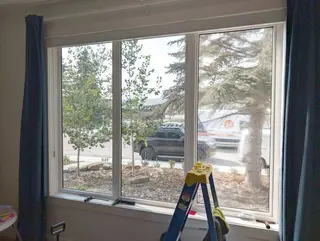
These client-shared photos show a filmed pane with visible cracks and a compass reading of 269° at the glass. We did not install this film, we did not inspect the installation, and we cannot determine what caused the cracking. We use the example only to explain why we identify the glass construction and check any proposed film against the manufacturer’s current film-to-glass guidance before recommending it.
Absorptive films raise the temperature difference across a pane, and manufacturers publish which of their products are approved on which glass constructions for exactly that reason. West-facing glass takes the sun at the hottest part of the Calgary afternoon, when the glass is already warm, so it is an orientation where that check matters — which is what the 269° reading records. Where a combination is excluded on the chart, we say so and offer one that is approved rather than installing it anyway — a client instruction cannot waive that rule.
Glass breakage and thermal fracture are excluded from our workmanship warranty, because glass fails for many reasons unrelated to film; manufacturer coverage applies only where its written program says it does, on qualifying combinations. Damage we cause to your glass, or a film we install against the documented film-to-glass rule, remains our responsibility. How we inspect and what the standard covers →
Why Chinook winds change solar film performance in Calgary
What does a Chinook actually do to a west-facing window?
A Calgary Chinook can swing the outdoor temperature 15-20°C within a few hours — a -15°C morning becoming a +5°C afternoon is routine in January and February. The glass itself follows that swing fast, and a west-facing pane already carrying direct afternoon sun heats and cools through a wider range, more often, than the same window would in a city without Chinooks. Film adhesive is rated for a cure and service temperature range; repeated rapid swings are the real-world stress test, not a single cold day.
Does this mean any film will fail in a Chinook climate?
No — but Calgary’s climate does not replace the manufacturer’s glass and film specifications. Durability and thermal-fracture risk depend on the product-and-glass combination, partial shading, frame condition, installation and the manufacturer’s stated limits; any manufacturer term is as stated on your quote. That is why the glass is identified and checked against the manufacturer’s current film-to-glass guidance before any product is recommended.
Does the altitude make it worse?
Yes, independently of the Chinook effect. Calgary sits at roughly 1,045 m, and UV intensity increases with altitude — every additional 1,000 m adds meaningful UV exposure compared to sea level. Combined with a Chinook’s rapid thermal cycling, west and south-facing glass in Calgary sees a genuinely harder combined load (UV + thermal cycling) than the same window would face in a lower-altitude, thermally stable city. This is the practical case for ceramic or spectrally selective film over a basic dyed film here specifically.
